
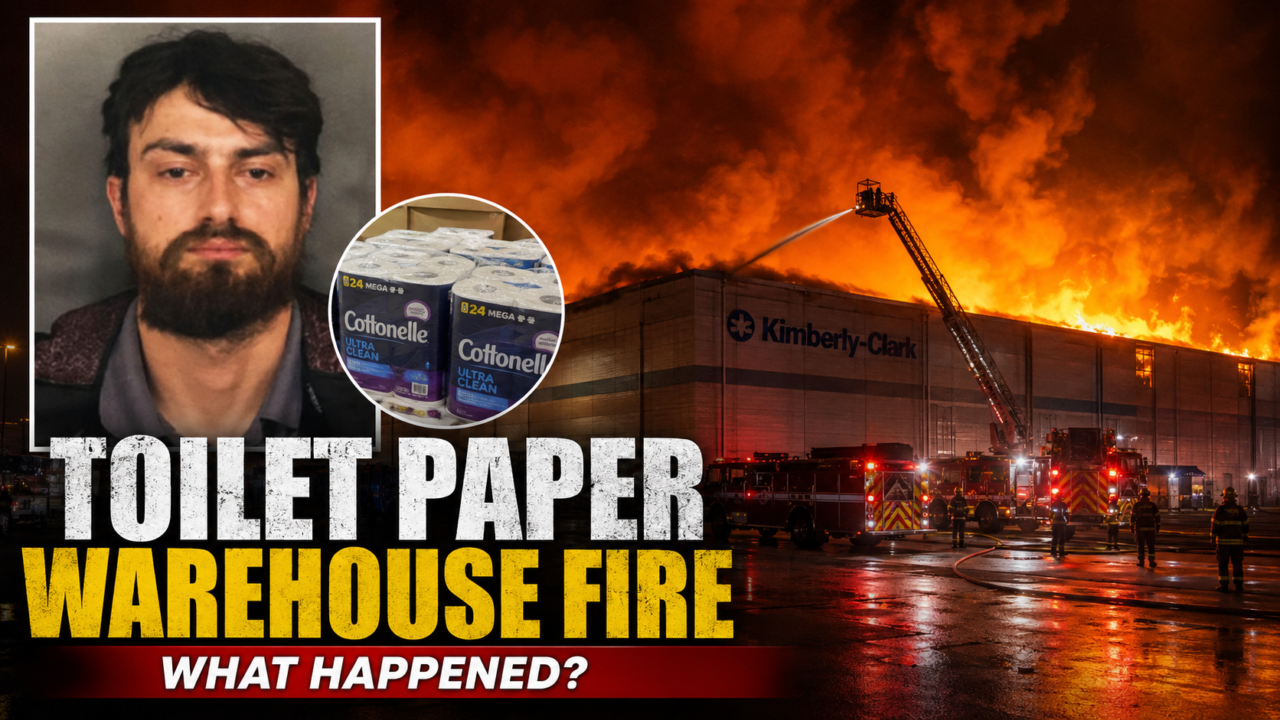

The toilet paper warehouse fire in Ontario, California, became one of the most dramatic warehouse fires in the United States in 2026. A massive Kimberly-Clark distribution facility was engulfed in flames, destroying paper products and causing extensive damage to the building.
The blaze quickly drew national attention because of the enormous size of the warehouse, the amount of combustible paper products inside, and the subsequent arrest of a worker accused of deliberately starting the fire. Investigators later treated the incident as an arson case, while officials worked to determine the full financial and operational impact.
What Happened in the Toilet Paper Warehouse Fire?
The toilet paper warehouse fire occurred at a Kimberly-Clark distribution center in Ontario, California, during the early morning hours of April 7, 2026. The facility covered approximately 1.2 million square feet and contained large quantities of household paper products, including toilet paper, facial tissue and related goods.
The fire rapidly expanded throughout the building. Because paper products can provide a substantial fuel source once flames spread through densely packed storage areas, firefighters faced an extremely difficult operation. The blaze eventually reached a six-alarm response.
The warehouse was ultimately destroyed, with the roof collapsing and the products stored inside being lost. Despite the enormous scale of the fire, no deaths were reported, and workers inside the facility were able to escape.
Where Did the Warehouse Fire Happen?
The fire happened in Ontario, California, an Inland Empire city located east of Los Angeles. The area is an important logistics and distribution hub because of its extensive warehouse network and proximity to major transportation routes.
The Kimberly-Clark facility was positioned in an industrial area of Ontario and served as a major distribution point for consumer products. Its destruction therefore represented more than the loss of a single building. It also disrupted an important part of the company’s distribution network.
The location helped explain why the incident received widespread attention. Ontario is home to numerous large logistics facilities, making warehouse safety and fire prevention particularly important for businesses operating in the region.
How Large Was the Kimberly-Clark Warehouse?
The Kimberly-Clark warehouse involved in the toilet paper warehouse fire measured roughly 1.2 million square feet. That is an enormous amount of indoor storage space, allowing huge quantities of consumer products to be held under one roof.
The size of the building also made firefighting more complicated. Once flames spread through a facility of this scale, firefighters must deal with long distances, heavy smoke, structural instability and the possibility of rapidly changing conditions.
Officials eventually determined that the building had suffered catastrophic damage. The destruction was significant enough that demolition work was later required to remove damaged portions of the structure.
Why Did the Fire Spread So Quickly?
One major factor in the intensity of the toilet paper warehouse fire was the type of inventory stored inside. Toilet paper, tissues, paper towels and other paper-based products are highly combustible when stored in large quantities.
A warehouse packed with paper products can contain an enormous amount of potential fuel. Once fire reaches multiple pallets or storage areas, flames can spread rapidly and generate intense heat.
The building’s size added another challenge. Firefighters initially worked inside the facility but later had to fight the blaze from outside as conditions became increasingly dangerous. Structural damage and the possibility of collapse made interior operations especially hazardous.
Was the Toilet Paper Warehouse Fire Arson?
Authorities investigated the blaze as a suspected case of arson and arrested a 29-year-old man identified as Chamel Abdulkarim. Investigators alleged that he worked through a third-party logistics company connected with operations at the facility.
According to court allegations, Abdulkarim deliberately started fires inside the warehouse. Investigators also examined video footage that allegedly showed paper products being ignited inside the building.
It is important to distinguish allegations from a final conviction. Abdulkarim pleaded not guilty to the state arson charges, while a separate federal criminal case was also filed. The legal proceedings therefore remained subject to the court process.
How Much Damage Did the Fire Cause?
The toilet paper warehouse fire caused an estimated $500 million in damage, making it an exceptionally costly industrial fire. The figure reflected both the destruction of the massive warehouse and the value of products and other property affected by the blaze.
The financial consequences extended beyond the physical structure. A distribution center of this size plays a role in moving consumer goods from manufacturers toward retailers and customers.
The loss therefore created potential logistical challenges for Kimberly-Clark and its distribution partners. Other facilities and transportation networks could be required to handle products that would normally have moved through the Ontario location.
Did the Fire Cause a Toilet Paper Shortage?
The destruction of a major toilet paper distribution facility naturally raised concerns about shortages. However, the fire did not mean that toilet paper disappeared from stores across the United States.
Large consumer-goods companies generally operate through multiple manufacturing, storage and distribution locations. That means the loss of one warehouse can create logistical pressure without necessarily eliminating nationwide supply.
Consumers who remembered the toilet paper shortages associated with the early COVID-19 pandemic were particularly interested in the story. However, a single warehouse fire is very different from a nationwide disruption involving manufacturing, transportation and consumer panic.
The most likely effect was localized or regional distribution pressure rather than an immediate nationwide toilet paper shortage.
What Products Were Stored in the Warehouse?
The facility handled Kimberly-Clark consumer products, including toilet paper and other paper-based household goods. Products associated with the company include Cottonelle toilet paper and Kleenex tissues, along with other personal-care and household products.
The presence of large quantities of paper goods contributed to the intensity of the fire. Once the inventory began burning, firefighters had to contend with a rapidly developing industrial blaze rather than a small localized warehouse fire.
The incident demonstrated how inventory type can dramatically influence the behavior and severity of a warehouse fire.
What Happened to the Suspect?
Chamel Abdulkarim was arrested following the fire and faced multiple state arson charges. He was also charged federally with arson involving a building used in interstate and foreign commerce.
The allegations against him were serious because the fire destroyed an enormous commercial facility and caused hundreds of millions of dollars in estimated damage. Prosecutors alleged that the fire was deliberately started inside the warehouse.
Abdulkarim later pleaded not guilty to the state charges. His case remains a legal matter, meaning allegations presented by prosecutors should not be treated as proof of guilt unless established through the judicial process.
Why Did the Toilet Paper Warehouse Fire Attract So Much Attention?
The story combined several elements that naturally attracted public attention: an enormous warehouse, a huge fire, toilet paper and other familiar household products, dramatic footage, and an alleged act of arson.
Toilet paper also carries unusual cultural significance in the United States because of the major purchasing surge seen during the early stages of the COVID-19 pandemic. As a result, images of a warehouse filled with burning paper products immediately reminded many people of earlier supply fears.
The scale of the incident made it even more striking. A building covering more than a million square feet was destroyed, hundreds of firefighters were involved, and the financial damage was estimated in the hundreds of millions of dollars.
What Is the Current Status of the Warehouse?
Following the fire, the damaged Kimberly-Clark facility was slated for demolition because of the extent of the destruction. Demolition operations began after officials determined that damaged sections of the structure needed to be removed.
The site’s future will depend on the company’s plans and the broader redevelopment of the property. Rebuilding or replacing a distribution center of this scale would be a major undertaking involving construction, logistics planning and significant investment.
For the surrounding community, the aftermath also involved concerns about construction activity, debris removal, traffic and other effects associated with clearing the destroyed facility.
Conclusion
The toilet paper warehouse fire in Ontario, California, was far more than an ordinary warehouse blaze. The destruction of the massive Kimberly-Clark distribution center resulted in an estimated $500 million in damage and highlighted the risks associated with storing huge quantities of combustible paper products in large industrial facilities.
The incident also became a major criminal investigation after authorities arrested a worker accused of deliberately starting the fire. Although the allegations are serious, the suspect pleaded not guilty and the case must proceed through the legal system.
For consumers, the biggest concern was whether the destruction would trigger toilet paper shortages. While the warehouse loss created significant logistical challenges, it did not by itself mean that the United States would face another nationwide toilet paper crisis.
FAQs
What was the toilet paper warehouse fire?
The toilet paper warehouse fire was a massive blaze that destroyed a Kimberly-Clark distribution facility in Ontario, California, on April 7, 2026. The warehouse stored toilet paper and other household paper products.
Where did the toilet paper warehouse fire happen?
The fire happened at a Kimberly-Clark distribution center in Ontario, California, in the Inland Empire region east of Los Angeles.
How big was the warehouse?
The warehouse covered approximately 1.2 million square feet, making it one of the largest commercial facilities affected by the fire.
Was the toilet paper warehouse fire caused by arson?
Authorities investigated the incident as arson and arrested Chamel Abdulkarim, who was accused of deliberately starting the fire. He pleaded not guilty to the state charges, and the allegations remain subject to the court process.
How much damage did the warehouse fire cause?
The fire caused an estimated $500 million in damage. The losses included the warehouse itself and the large quantity of consumer products stored inside.
Did anyone die in the toilet paper warehouse fire?
No deaths were reported in connection with the fire. A large emergency response was required to control the blaze and protect people in and around the facility.
Did the fire cause a toilet paper shortage?
The destruction of the warehouse created potential distribution challenges, but it did not automatically cause a nationwide toilet paper shortage. Kimberly-Clark operates through a broader supply and distribution network.
What products were inside the warehouse?
The facility contained Kimberly-Clark household products, including toilet paper, tissues and other paper-based consumer goods.
Who was arrested after the warehouse fire?
Authorities arrested Chamel Abdulkarim, a 29-year-old man who was associated with a third-party logistics operation at the facility. He faced state and federal arson allegations.
Is the Kimberly-Clark warehouse being rebuilt?
The destroyed facility required demolition after the fire. Plans for the property’s longer-term replacement or redevelopment depend on decisions by the company and relevant authorities.